Follow the landscape from cane to bottle
Rhumerie de Chamarel is in Chamarel’s southwest hill country. Its official production information describes rum made from freshly pressed sugar-cane juice and cane grown for the distillery on the estate. A visit can add context to the agricultural landscape around you: instead of seeing cane only from the car window, you can learn how it becomes a local product.
What to look for during a guided tour
Let the guide explain the main stages—cane preparation, fermentation, distillation and ageing—and ask how the equipment changes the result. You do not need to know rum terminology before arriving. Comparing the purpose of a column and an alembic, or understanding how wood affects the finished product, can make the visit interesting even if you choose not to taste.
Production and visitor access are different things. Check whether your chosen date coincides with active processing if that matters to you, and do not assume every machine will be operating. Follow the designated route and keep away from equipment unless staff invite a closer look.
Choose the appropriate tour arrangement
The distillery publishes standard visits and a separately arranged private-tour option. Check its official visitor information for current days, reporting times and prices before setting out. Private arrangements need booking, and restaurant service has its own schedule. Do not treat a general opening time as proof of a place on a particular guided departure.
Ask about languages, children or non-drinkers and any mobility assistance your group needs. An indoor element can be useful in changeable weather, but the complete route may still involve outdoor areas or steps. Confirm the actual route rather than assuming a distillery is fully step-free.
Make tasting optional and transport straightforward
A tasting is one way to explore differences between the distillery’s products, not an obligation. You can focus on the production story and choose not to drink. The person driving should remain alcohol-free; arrange a taxi or driver in advance if everyone in your group wants to taste. The hill roads are a good reason to decide this before arriving.
If you plan to buy a bottle, check your airline’s baggage rules and the customs allowance that applies to your journey. Shop staff may help with packing, but the allowance and luggage requirements are yours to confirm. Allow space in your schedule to shop without delaying a booked transfer.
Combine the visit without rushing Chamarel
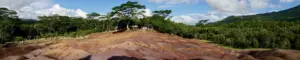
The Seven Coloured Earth and Chamarel Waterfall are nearby area attractions with separate entry arrangements. Choose one or two main visits and leave a proper lunch break rather than assuming all of Chamarel fits comfortably before noon.
Allow roughly one to two hours for the distillery visit and browsing, excluding a meal and travel; this is an editorial estimate. For listed excursions, browse our Mauritius experiences and check whether the distillery tour, tasting and transport are included in the actual product.